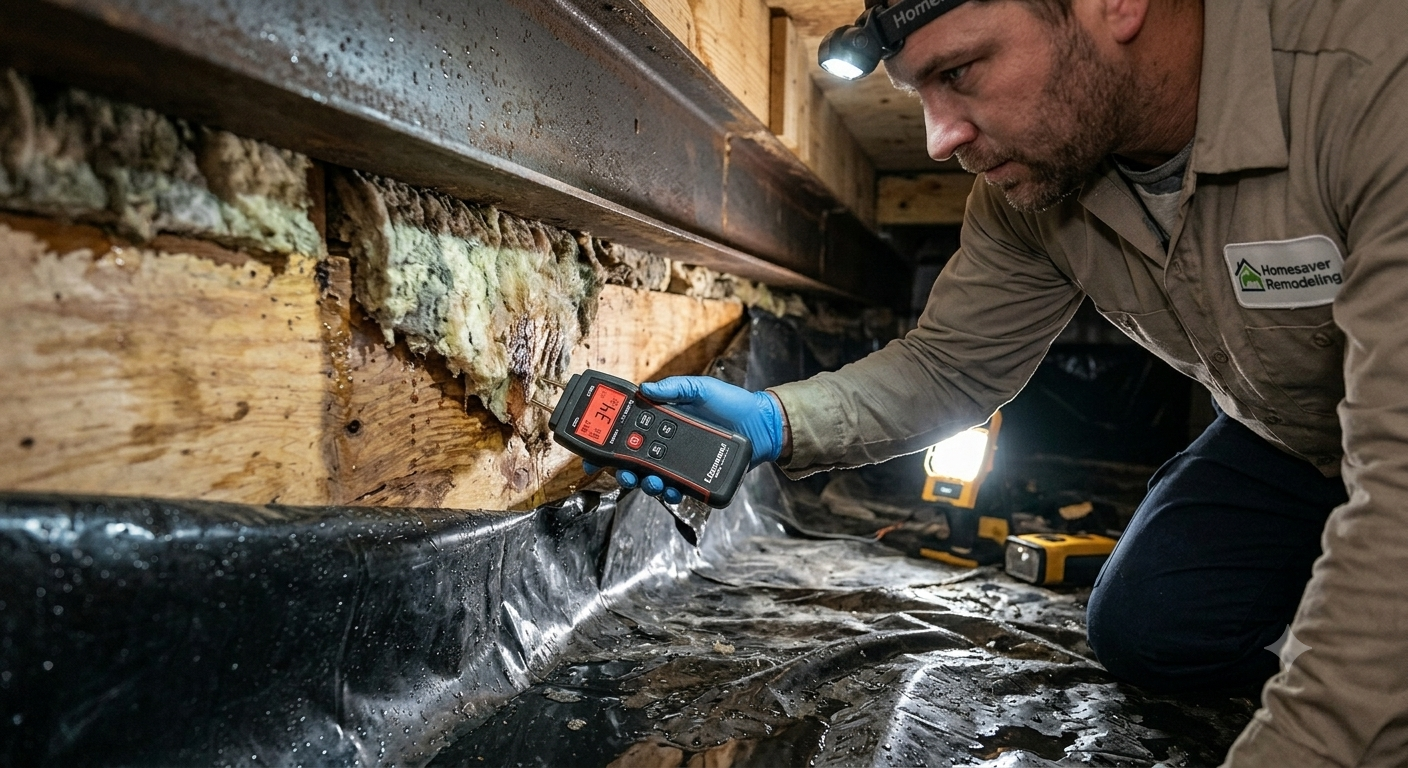
Water moves through a manufactured home faster than most homeowners expect. What starts as a burst pipe under the sink or a slow roof leak after a storm doesn't stay contained to the room where it began. It travels laterally under the floor, saturates insulation, works into wall cavities, and compromises structural components — often before there's any visible sign at the surface that something serious is happening.
The materials manufactured homes are built with perform well under normal conditions, but they aren't forgiving when moisture gets in and stays. Engineered wood subfloors soften and delaminate. Batt insulation holds water against framing instead of letting it dry. Pressed board wall panels absorb moisture and lose integrity quickly. A water emergency in a manufactured home is on a faster clock than the same event would be in site-built construction.
Homesaver Remodeling responds to water emergencies in mobile and manufactured homes across Michigan. We work exclusively on these homes, which means we know how water travels through them, where damage hides, and what it takes to fix it completely. When you call us, we find the source before we start the repair.
What Counts as a Water Emergency
Common Sources
Not every water emergency announces itself with standing water and an obvious cause. Some develop slowly and are already well established by the time a homeowner notices something wrong. Sources we respond to regularly include:
- Burst or frozen pipes
- Water heater failures
- Washing machine and appliance leaks
- Roof leaks following storms or prolonged winter ice
- Crawlspace flooding from ground saturation or drainage failure
- Sewage backups and drain failures
The Common Thread
What all of these share is that time is working against you from the moment they start. A slow leak behind a wall panel that goes undetected for two weeks causes far more damage than a pipe that bursts and gets addressed within hours. If something feels off — soft flooring, a new smell, a stain that wasn't there before — that's the right time to call, not after you've confirmed the worst.
How Water Moves Inside a Manufactured Home
Under the Floor
Water that enters at floor level doesn't pool and stay put. It moves laterally through the insulation cavity beneath the subfloor, saturating material across a wide area before it ever surfaces visibly. By the time a soft spot appears underfoot, the moisture has typically spread several feet in every direction from the source.
Into Wall Cavities
Prolonged moisture exposure at the base of a wall wicks upward into wall panels and the framing behind them. Pressed board panels absorb moisture readily, and once the framing behind them is wet, the structural integrity of that wall section begins to degrade.
Through the Belly Wrap
The belly wrap is the fabric layer that seals the underside of a manufactured home. When water intrusion is significant enough, it compromises this layer — and once the belly wrap is breached, the crawlspace and the home's structural underside are exposed to ongoing moisture and temperature fluctuation.
The Risk of Delayed Action
What Happens After a Water Emergency in a Manufactured Home?
Water damage moves fast — especially under mobile and manufactured home floors.
Hour 0–6
Water Enters
A burst pipe, roof leak, appliance failure, sewage backup, or crawlspace flooding starts the damage cycle.
6–24 Hours
Moisture Spreads
Water travels under the floor, saturates insulation, and moves laterally before damage is visible inside the home.
24–48 Hours
Mold Risk Begins
Soft flooring, musty odors, stains, and hidden moisture may appear as mold-friendly conditions develop.
48–72 Hours
Materials Break Down
Subfloors may soften or delaminate, insulation stays wet, and the vapor barrier or belly wrap may be compromised.
1 Week+
Repairs Get Bigger
What could have been a targeted repair may become structural replacement, mold remediation, and full material restoration.
Homesaver Tip: If you notice soft floors, a new smell, staining, or water near plumbing, call before opening walls or pulling flooring. A proper assessment helps prevent missed damage.
What Happens to Manufactured Home Materials Over Time
The timeline for moisture damage in a manufactured home is compressed. Engineered wood subfloors begin to soften within the first day or two of sustained moisture exposure. After 48 to 72 hours, delamination starts. After a week, the structural integrity of the affected section is often compromised to the point where replacement is the only option.
Wet insulation doesn't dry out effectively on its own. It holds moisture against the wood structure beneath the floor and creates the conditions for rot and mold growth that continue long after the original water source has been addressed.
The Mold Connection
Standing moisture in a manufactured home crawlspace or subfloor cavity creates mold-friendly conditions within 24 to 48 hours in warm weather. Michigan's spring and summer temperatures accelerate that timeline. A water emergency that isn't fully resolved — source corrected, wet materials replaced, moisture eliminated — becomes a mold problem on top of the original structural damage.
What Delay Actually Costs
The difference between a fast response and a delayed one is measurable in repair scope:
- A subfloor section caught early may require a targeted repair. The same damage left for two weeks often requires full replacement across a larger area, including insulation and vapor barrier.
- A localized wall panel affected by moisture is a panel replacement. Moisture that spreads to framing and adjacent panels becomes a more involved structural repair.
- Water damage addressed before mold establishes is a water repair. Water damage that develops mold becomes two jobs instead of one.
What Homesaver's Water Emergency Response Involves
Assessment Before Repair
Every water emergency response starts with a full assessment. We trace where the water entered, where it traveled, and the full area of material involvement before any repair work begins. Skipping this step is how repairs get done that miss half the damage.
Moisture Elimination
Drying a manufactured home after water intrusion requires more than fans and open windows. We address moisture in the subfloor cavity, the insulation layer, and the crawlspace — the areas where water collects and stays in these homes.
Material Evaluation and Replacement
Not everything that got wet needs to be replaced, but the determination has to be made carefully. Materials that have absorbed significant moisture and cannot be effectively dried in place are removed and replaced. This includes:
- Subfloor sections that have softened or delaminated
- Insulation that is saturated or contaminated
- Vapor barrier and belly wrap that has been compromised
- Wall panels and ceiling sections where moisture has penetrated
Source Correction
The repair isn't finished when the visible damage is addressed. The pipe, the roof section, the drainage issue, or whatever allowed water in needs to be corrected as part of the job. Repairing damage without fixing the source is how the same problem comes back six months later.
Final Walkthrough
Every job ends with a walkthrough confirming that the source has been resolved, the affected materials have been properly addressed, and the home is in a condition where the damage won't continue or recur.
What to Do Before Homesaver Arrives
Taking the right steps before we get there can limit how far the damage spreads:
- Shut off the water source if it's accessible and safe to do so
- Turn off electricity in affected areas if there is any standing water or risk of contact
- Do not run fans across wet flooring — in a manufactured home, this circulates moisture into surrounding materials rather than drying them out
- Document what you see with photos before anything is moved, cleaned, or covered
- Do not pull up flooring or open walls before an assessment — disturbing affected areas before the full scope is understood can complicate the repair
Service Areas for Water Emergency Repair Across Michigan
Homesaver serves mobile and manufactured homeowners throughout:
- Macomb County — Shelby Township, Macomb Township, Clinton Township, and surrounding communities
- Oakland County — Waterford, Auburn Hills, Rochester, Orion Township, South Lyon
- Lapeer County — Davison and surrounding areas
- St. Clair County — Manufactured home communities throughout the county
- Wayne County — Manufactured homeowners across the metro area
Water Damage Does Not Wait
Every hour after a water emergency starts, the damage in a manufactured home is spreading. The homeowners who come through these situations with the smallest repair scope are the ones who called at the first sign something was wrong — a soft spot, a smell, a stain — before the moisture had time to travel and the materials had time to fail.
Homesaver Remodeling works exclusively on mobile and manufactured homes across Michigan. When you call us for a water emergency, we assess the full scope, find the source, and fix it completely. If something in your home has you concerned, call now.
📞 (586) 610-8608 🔗 homesaverremodeling.com
Before Homesaver Arrives
✓ Shut off water if safe
✓ Turn off electricity near standing water
✓ Take photos before cleanup
✓ Do not run fans across wet floors
✓ Do not open walls or pull flooring before assessment