⚡ Fast Response | Expert Repairs | Trusted Service
MOBILE HOME REPAIRS
Water Damage & Plumbing Repairs
Emergency Mobile Home Storm Damage Repair
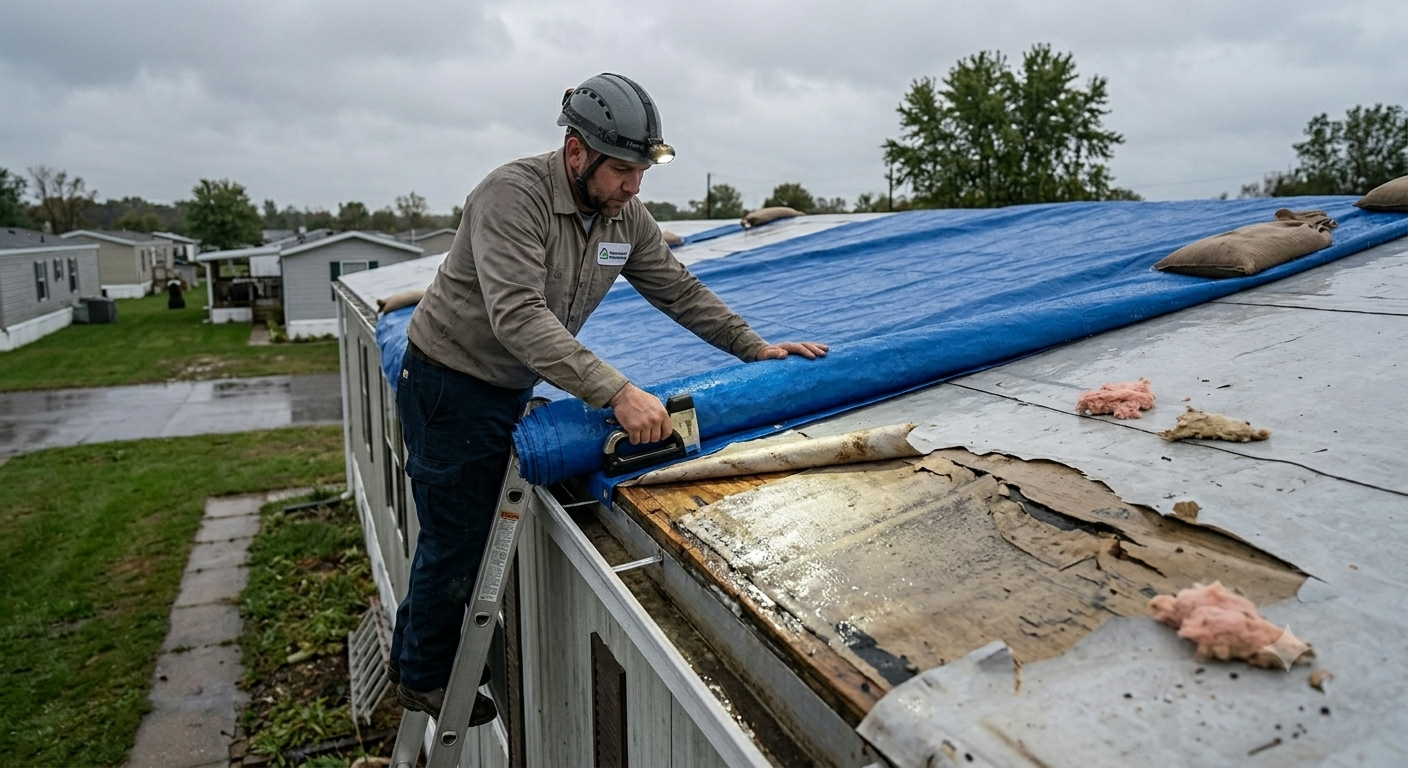
At Homesaver Remodeling, we provide specialized emergency storm damage repair for manufactured homes across Michigan. High winds, hail, and fallen debris interact with mobile homes differently than site-built structures—easily peeling back roof membranes and displacing skirting panels. Our priority is securing your home fast to stop active leaks. We then provide a comprehensive assessment of both visible exterior impact and hidden secondary damage to your insulation, subfloors, and crawlspace.
Michigan storms don't give manufactured homeowners much warning. A line of severe thunderstorms can move through in under an hour, and by the time it clears, a home can have a torn roof section, displaced skirting, broken windows, and water already working its way into the floor system. The damage that's visible after the storm is rarely the whole picture.
Manufactured homes face storm risks that site-built construction handles differently. The roof system, skirting, and crawlspace configuration of a mobile or manufactured home create specific vulnerabilities to wind, hail, and debris impact — and when those systems are breached, the secondary damage from water intrusion and crawlspace exposure compounds quickly if the home isn't secured fast.
Homesaver Remodeling responds to storm damage in mobile and manufactured homes across Michigan. We work exclusively on these homes, which means we understand how they're built, where storm damage travels inside them, and what a complete repair requires. When we arrive, we secure the home first, then assess the full scope before any repair work begins.
How Michigan Storms Damage Manufactured Homes
Quick Answer
What Should I Do First After Storm Damage to a Manufactured Home?
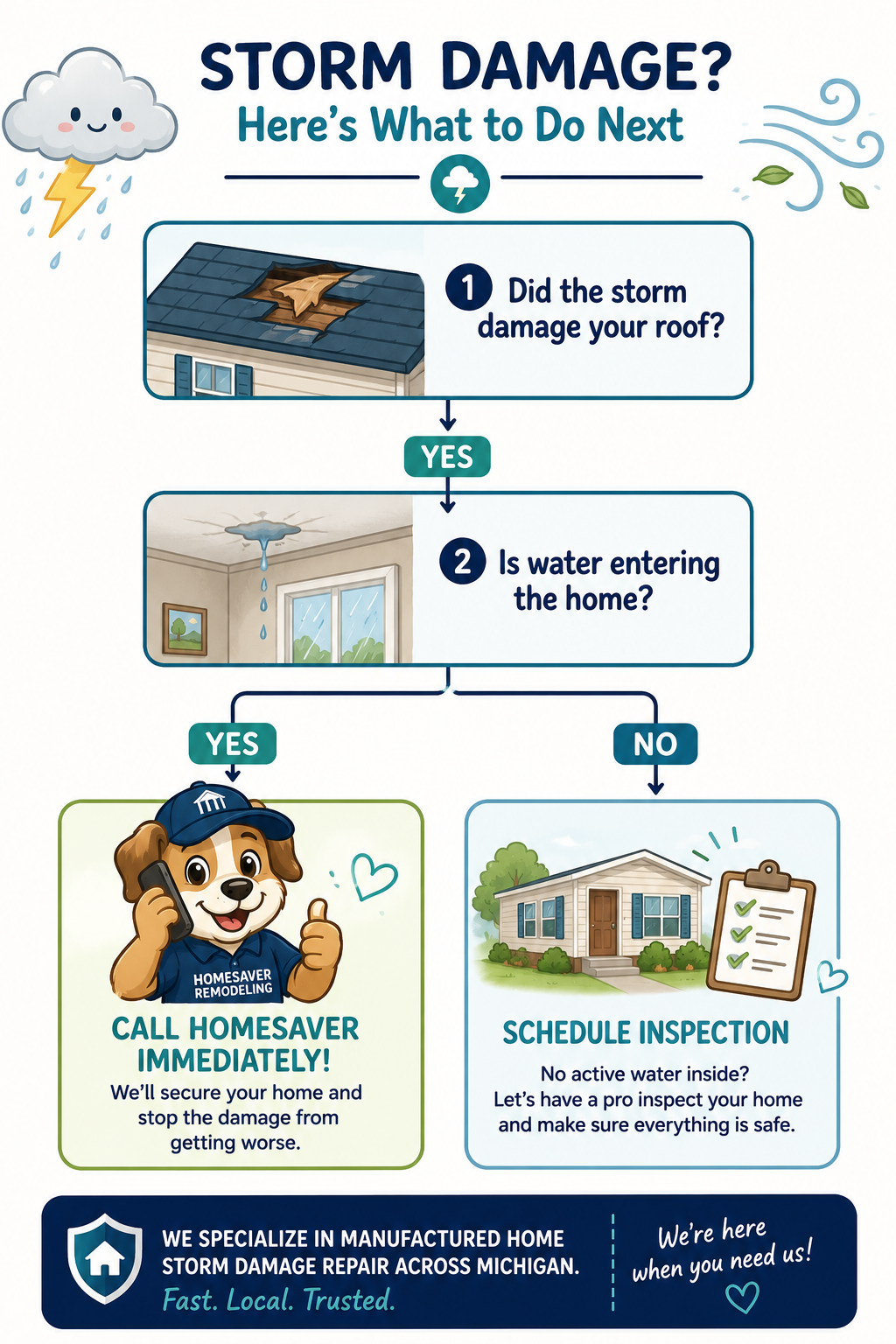
First, make sure everyone is safe and stay away from damaged roof sections, broken windows, loose skirting, or exposed electrical areas. Then, photograph the damage before anything is moved or cleaned up and call Homesaver if the home needs to be secured from active water intrusion.
In a manufactured home, storm damage can spread quickly through the roof system, crawlspace, insulation, floor system, and wall cavities. Securing the home early helps reduce secondary water damage, mold risk, and larger structural repairs.
1. Stay Safe
Do not climb onto a storm-damaged roof or enter areas that may be structurally unsafe.
2. Document Everything
Take photos from multiple angles before moving, covering, or discarding damaged materials.
3. Stop Active Damage
If water is entering the home, the priority is securing exposed areas before the damage spreads.
Need help after a storm? Call Homesaver Remodeling at
(586) 610-8608 for manufactured home storm damage repair in Michigan.
High Winds
Wind interacts with manufactured home roof systems and skirting differently than it does with site-built construction. Roof seams and edges that are intact under normal conditions can lift under sustained wind pressure. Skirting panels catch wind and displace easily, leaving the crawlspace exposed. In significant wind events, entire roof sections can peel back.
Hail
Hail damages the roofing materials, siding, and vents that are standard on manufactured homes — often in ways that aren't immediately visible but create entry points for water. A hail strike that leaves a small puncture in roof membrane or cracks a vent cover sets up a slow leak that may not show inside the home for days or weeks.
Fallen Trees and Debris
The roof structure of a manufactured home is not designed to absorb the same impact loads as site-built framing. A fallen branch or tree section that would cause cosmetic damage to a site-built roof can cause structural compromise in a manufactured home, requiring assessment of the roof decking, rafters, and any interior systems beneath the impact zone.
Ice and Winter Storms
Ice damming, snow load, and freeze-thaw cycles create storm damage that develops slowly and is often discovered late. Ice that forms along roof edges redirects meltwater under roofing materials. Heavy snow load stresses roof systems that aren't designed for prolonged accumulation. These events cause damage that compounds over weeks rather than hours.
Heavy Rain and Flooding
Storm-driven rain finds every gap — lifted roof seams, cracked vent covers, skirting gaps at the perimeter — and once it's inside, it moves fast through the floor system and crawlspace.
Where Storm Damage Shows Up in Manufactured Homes
Warning Signs
Storm Damage You Can See vs. Damage You Might Miss
After a Michigan storm, the obvious damage is only part of the story. Manufactured homes can also develop hidden water intrusion, crawlspace exposure, and structural issues beneath the surface.
👀
Visible Damage
Torn or lifted roof sections
Missing or displaced skirting panels
Broken windows or damaged door seals
Dented siding, fascia, or gutters
Tree limbs, debris impact, or puncture marks
🔎
Hidden Damage
Wet insulation under the floor system
Moisture spreading through wall cavities
Small roof punctures that become slow leaks
Exposed crawlspace from skirting failure
Soft subflooring, mold risk, or belly wrap damage
Homesaver Tip: If your manufactured home has visible storm damage, assume there may be hidden damage too. A fast inspection can prevent water intrusion from becoming mold, soft flooring, or a larger structural repair.
Storm damage in these homes follows predictable patterns once you know where to look.
The most common damage locations:
Roof decking and seams — lifted edges and torn membrane sections are the primary water entry point after high-wind events
Skirting — displaced or missing panels expose the crawlspace to moisture, animals, and temperature extremes
Siding and wall panels — impact damage from hail and debris creates moisture entry points that aren't always visible from outside
Fascia and gutters — damage that redirects water toward the home's foundation and crawlspace perimeter
Vents and roof penetrations — small openings that become significant entry points after impact
Windows and doors — frame shifts and seal failures after wind and debris events allow both water and air infiltration
What Homesaver's Storm Emergency Response Involves
Securing the Home First
Before any repair work begins, the priority is stopping ongoing damage. Open roof sections get covered, displaced skirting gets addressed, and any active water intrusion points are identified and temporarily closed. This step limits how far the damage spreads while the full assessment is completed.
Full Damage Assessment
We assess both the visible damage and the areas where secondary intrusion has occurred — the subfloor, insulation, crawlspace, and wall cavities beneath and around the primary entry points. This is where manufactured home expertise matters most. The damage pattern inside these homes follows the construction, and reading it correctly requires knowing how they're built.
Repair and Restoration
Depending on what the assessment finds, our storm response can include:
Subfloor, insulation, and vapor barrier repair where storm water entered
Crawlspace restoration if skirting displacement allowed animal or moisture intrusion
Final Walkthrough
Every job ends with a walkthrough confirming all entry points are closed, secondary damage has been addressed, and the home is in a condition where the storm damage won't continue to develop.
Working With Insurance After Storm Damage
Document Before Anything Is Touched
The first thing to do after a storm is photograph the damage — from multiple angles, with timestamps if possible — before anything is moved, covered, or cleaned up. This documentation supports your claim and gives the adjuster a clear picture of the initial damage scope.
Insurance Claim Tip
Before the Adjuster Visits, Don’t Do These 4 Things
After storm damage, it is natural to want to clean up fast. But certain actions can make the insurance process harder or cause important damage details to be missed.
×
Don’t Discard Damaged Materials
Keep damaged skirting, siding, roofing materials, insulation, and interior materials available for documentation when possible.
×
Don’t Make Permanent Repairs Too Soon
Emergency protection is important, but permanent repairs should wait until the damage has been properly assessed and documented.
×
Don’t Climb Onto a Damaged Roof
Storm-damaged manufactured home roof systems may be unstable. Use photos from the ground and call a professional for safe assessment.
×
Don’t Sign Under Pressure
Avoid rushed repair contracts before you understand the full scope of damage, repair needs, and insurance documentation.
Do this instead: Take photos from a safe distance, protect exposed areas if it can be done safely, and call Homesaver at
(586) 610-8608 if your manufactured home needs emergency storm damage repair.
What Homesaver Can Provide
We document our assessment findings in a way that supports the insurance process — damage scope, affected materials, and repair requirements laid out clearly. Having a specialist's assessment on file gives your adjuster a concrete basis for the claim rather than a general contractor's estimate built around site-built construction assumptions.
Don't Wait on Repairs to Protect the Structure
One of the most common mistakes after storm damage is deferring all action until the insurance claim is settled. Protecting the home — covering exposed areas, securing displaced skirting, stopping active water intrusion — should happen immediately. Most policies require reasonable protective action after a loss. Homesaver can help you understand what needs to happen now versus what can wait for the adjuster.
What Not to Do Before the Adjuster Visits
Don't discard damaged materials — adjusters need to see them
Don't make permanent repairs before the adjuster has documented the damage
Don't sign any repair contracts under pressure before you've had a chance to review the scope
What to Do Immediately After a Storm
Taking the right steps in the first hour protects the home and supports the repair and insurance process:
Stay clear of structural damage until the home has been assessed for safety
Photograph everything from a safe distance before moving or covering anything
Cover exposed areas with a tarp only if it can be done safely from the ground — do not climb onto a storm-damaged roof
Do not attempt repairs to the roof or structural components without understanding how manufactured home systems are assembled
Call Homesaver before your insurance company if the home needs to be secured — stopping ongoing damage comes first
Service Areas for Storm Emergency Repair Across Michigan
Macomb County — Shelby Township, Macomb Township, Clinton Township, and surrounding communities
Oakland County — Waterford, Auburn Hills, Rochester, Orion Township, South Lyon
Lapeer County — Davison and surrounding areas
St. Clair County — Manufactured home communities throughout the county
Wayne County — Manufactured homeowners across the metro area
Secure Your Home Before the Damage Spreads
Storm damage in a manufactured home doesn't hold still. Every day an entry point goes unaddressed, moisture is moving further into the floor system, insulation is staying wet, and the repair scope is growing. The homeowners who come through storm events with the smallest repair bills are the ones who called immediately — before the secondary damage had time to develop.
Homesaver Remodeling works exclusively on mobile and manufactured homes across Michigan. When you call us after a storm, we secure your home first, assess the full scope second, and give you a clear picture of what the repair involves before any work begins. If your home took a hit, call now.