
We Service Mobile Parks In Michigan Including Macomb County, Oakland County, Lapeer County, St Clair County, Wayne County And More
For emergency service, call now:
(586) 610-8608⚡ Fast Response | Expert Repairs | Trusted Service
July 31, 2026
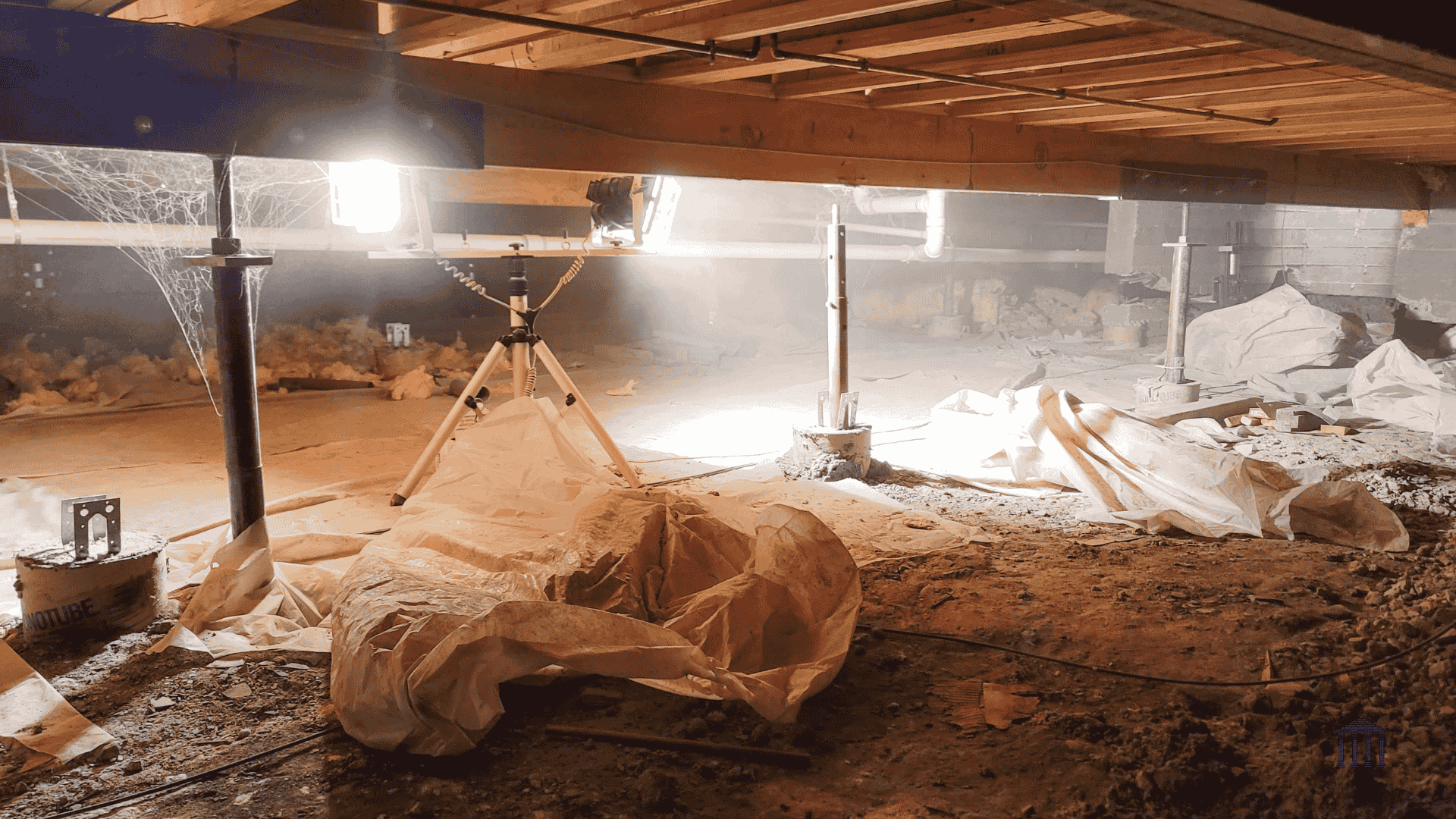
Most manufactured homeowners don't think much about what's happening underneath their home. It's out of sight, it's not somewhere you spend time, and as long as nothing inside the home seems wrong, it's easy to assume everything under there is fine. Spring rain in Michigan has a way of testing that assumption without announcing itself.
When April arrives and the rains start in earnest, the ground underneath and around a manufactured home doesn't just get wet. It gets saturated. Moisture that has nowhere left to go starts pushing upward, finding its way into crawlspaces where it can accumulate, sit, and begin working on the structure of the home from the bottom up. The damage that results is often more serious than anything visible from inside, and it rarely announces itself until it has already been progressing for weeks. By the time a soft floor or a persistent musty smell becomes impossible to ignore, the crawlspace has usually been holding moisture through most of the spring season.
Catching what's happening under your home early is what separates a manageable restoration from a repair project that has grown well beyond what it needed to be.
The vapor barrier is the primary line of defense between ground moisture and the structure of the home. It's designed to block moisture from rising up into the floor assembly, and when it's in good condition it does that job effectively. Over time, however, vapor barriers crack, shift, develop tears, and lose coverage at seams and edges. Spring moisture pressure accelerates that deterioration and exploits any weakness in the barrier's coverage.
Once the vapor barrier is compromised, there's nothing standing between saturated soil and the materials above it. Ground moisture rises freely into the crawlspace environment and begins affecting everything it contacts.
The engineered wood used in manufactured home subfloors is practical and performs well under normal conditions. Its vulnerability is moisture. When crawlspace humidity is elevated consistently through a wet spring, the subfloor absorbs that moisture from below. The material softens, loses structural integrity, and begins to delaminate. What starts as a subtle softness underfoot becomes a more serious compromise in the load-bearing capacity of the floor assembly.
Floor joists face similar risks. Persistent moisture exposure causes wood framing to swell, warp, and eventually rot. Joists that have been subjected to multiple wet seasons without intervention can reach a point where they no longer provide adequate support, which turns a moisture problem into a structural one.
Manufactured homes typically have insulation installed beneath the floor, fitted between the joists and held in place by the belly wrap. That insulation is supposed to keep the home warmer in winter and cooler in summer. When it gets wet, it stops doing that job and starts doing the opposite. Saturated insulation holds moisture against the wood framing above it rather than letting it dry out. It becomes dense, heavy, and ineffective, and it creates sustained contact between moisture and structural materials that accelerates deterioration.
Wet insulation is also a mold risk. The combination of moisture content, organic material, and an enclosed dark environment is exactly the set of conditions mold needs to establish itself.
Mold needs three things to grow: moisture, organic material, and a surface to grow on. A wet crawlspace under a manufactured home provides all three in abundance. The soil holds moisture. The wood framing, insulation, and belly wrap provide organic material and surface area. The enclosed, undisturbed environment stays dark and humid. Once moisture establishes itself in a crawlspace and isn't addressed, mold is not a possibility. It's a near certainty.
The particular challenge with crawlspace mold is that it develops completely out of sight. There's no reason for most homeowners to go under their home regularly, which means mold can become well-established before anyone suspects it's there.
Mold found in the crawlspace is almost never isolated to the crawlspace. Spores travel through air movement, and as established above, crawlspace air moves into the living areas of the home. Mold that begins on floor joists or the underside of the subfloor can work its way up through the floor assembly into wall cavities and insulation above. By the time it's visible inside the home, it has typically been spreading for an extended period.
The areas to investigate when crawlspace mold is confirmed or suspected include:
Mold exposure in the home environment is a genuine health concern, particularly for residents who are older, immunocompromised, or have respiratory conditions. Symptoms of mold exposure can include persistent coughing, nasal congestion, eye irritation, headaches, and worsening asthma. These symptoms are often attributed to seasonal allergies, which delays recognition that the home itself may be the source.
For manufactured homeowners in Shelby Township and surrounding Michigan communities, spring is the season when crawlspace mold conditions peak. The wet conditions outside and the enclosed crawlspace environment create a window during which mold can establish and spread rapidly if moisture isn't controlled.
Manufactured homes are typically supported by a pier and beam system rather than a poured concrete foundation. Piers are set at intervals beneath the home, and the home's weight distributes across them. That system works well under stable conditions. Persistent moisture around and beneath those piers creates unstable conditions.
Saturated soil around piers loses its load-bearing consistency. It shifts, compresses unevenly, and can allow piers to settle or move in ways that affect the level and structural integrity of the home above. Foundation water intrusion that goes unaddressed through a wet spring doesn't just affect the crawlspace. It affects the entire support system the home depends on.
There's a meaningful difference between a crawlspace that's holding moisture and a foundation that has been compromised by it. These signs suggest the problem has moved from moisture management to structural repair:
Foundation and structural issues in manufactured homes are not the same as foundation issues in site-built homes, and they should not be approached the same way. The pier and beam system, the way the home's structure distributes load, and the materials involved all require specific knowledge to assess and repair correctly. A general contractor without manufactured home experience may misdiagnose the problem, apply the wrong repair approach, or miss related issues that are contributing to the instability.
Homesaver works exclusively with manufactured homes. Foundation assessment and repair is part of that specialization, and it's work that gets done with full understanding of how these structures are built and how moisture affects them specifically.
Crawlspace damage is one of the most underdiscussed problems in manufactured home ownership. It doesn't make itself known until it's serious, it's not visible from inside the home, and most homeowners have no reason to go under their home regularly enough to catch problems early. Spring is the season when that dynamic creates the most risk, because it's also the season when the conditions for crawlspace damage are at their worst.
Homesaver Remodeling has spent 15 years working exclusively with mobile and manufactured homeowners across Michigan. Crawlspace water damage restoration, vapor barrier replacement, mold remediation, and foundation assessment are core parts of what we do. We understand how these homes are built, where they're vulnerable in a Michigan spring, and how to address the damage at its source rather than just its surface.
If you've noticed any of the warning signs, or if you simply haven't had someone look under your home since last spring, reach out today. What's under your home deserves the same attention as everything inside it.

We Service Mobile Parks In Michigan Including Macomb County, Oakland County, Lapeer County, St Clair County, Wayne County And More