
We Service Mobile Parks In Michigan Including Macomb County, Oakland County, Lapeer County, St Clair County, Wayne County And More
For emergency service, call now:
(586) 610-8608⚡ Fast Response | Expert Repairs | Trusted Service
January 21, 2026
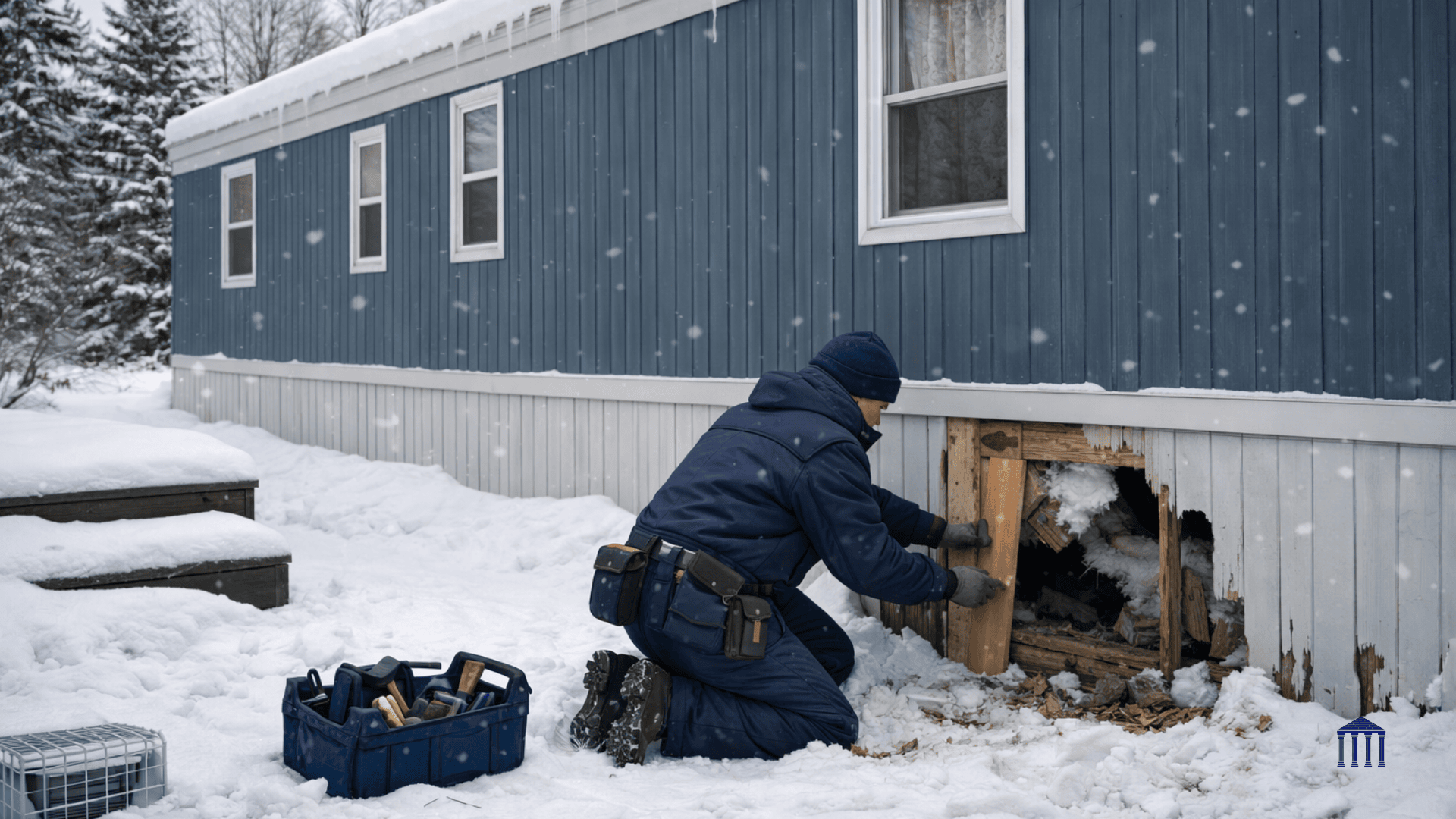
Michigan winter changes animal behavior fast. When temperatures drop and snow covers the ground, wildlife starts looking for warmth, shelter, and a protected place to ride out the season. That search often leads straight to mobile and manufactured homes—especially the space around the skirting and underbelly, where warm air from the home can make the area feel like a safe pocket compared to the outdoors.
The tricky part is that animal damage rarely starts out dramatic. It usually begins as a small gap that gets widened over time or a loose skirting panel that becomes an easy entry point. From there, animals can tear and disturb insulation, chew through vulnerable materials, and create openings that let cold air rush under the home. Once the underbelly barrier is compromised, heat loss increases, floors get colder, and the heating system has to work harder to keep up. In the middle of a Michigan cold snap, that can turn into a comfort problem quickly—and a cost problem right behind it.
A winter approach to animal damage is different than a warm-weather approach. The priority isn’t just shooing something away—it’s stopping repeat entry and restoring the protective barrier that keeps the home warm and stable. That means securing skirting, sealing common entry points, repairing underbelly tears, and replacing any insulation that’s been compromised. When those basics are handled early, the rest of the season is calmer: fewer drafts, warmer floors, better heating performance, and a lower chance of surprises after the next storm or deep freeze.
Seal openings, reinforce weak points, and secure skirting.
Start by locating where the intrusion is happening. Look closely at corners, seams, low spots, and any section of skirting that flexes when you press it. A loose panel is an invitation. A cracked section is a doorway. Securing panels tightly and reinforcing weak areas prevents the “easy in, easy out” cycle that leads to repeat damage.
Remove access routes at corners, seams, and utility penetrations.
Corners and seams are common because that’s where materials meet and gaps naturally form over time. Utility penetrations matter because pipes, wiring, and HVAC lines often leave small openings that are easy for rodents to exploit. Even if the hole seems tiny, remember: if a rodent can get its head through, it can usually get the rest through.
Prevent repeat intrusion (animals return to known shelter).
Animals don’t forget good shelter. Once a warm spot is established, they’ll keep checking it—especially in harsh winter weather. That’s why “temporary fixes” often fail. The repair needs to be secure and durable enough to hold through wind, snow, and freeze-thaw cycles.
Repair belly wrap tears and sagging sections.
If the wrap is hanging or ripped, it’s exposing insulation, ductwork, and plumbing to cold air and moisture. Securing and repairing it helps stabilize under-home temperatures and stops wind from washing through the system.
Replace compromised insulation and secure it properly.
Insulation that’s been nested in, torn, or soaked won’t perform. It’s not enough to “push it back.” It needs to be restored and held in place so it doesn’t sag again. Consistent coverage is what brings floor comfort back.
Protect ductwork and plumbing runs.
Animals often disturb duct runs because they’re warm and accessible. If ducts are damaged or disconnected, your furnace can run harder while rooms stay cold. Plumbing lines that lose insulation protection become more vulnerable during Michigan cold snaps. Restoring that protection is part of getting the home stable again.
Inspect electrical wiring where chewing is suspected.
Chewed wiring is not a “watch and wait” issue. It can create shorts, arcing, and serious hazards. Any signs of gnawing, exposed conductors, or unusual electrical behavior (like flickering lights) should be treated as urgent.
Check duct connections and airflow.
If you notice weak airflow, cold rooms, or registers that don’t feel consistent, duct damage under the home may be part of the problem. Repairing connections and restoring duct integrity is often one of the fastest ways to improve whole-home warmth.
Identify plumbing exposure points and add protection.
If insulation has been pulled away from supply lines or low points under sinks, the risk of freezing increases quickly when temperatures drop. Adding protection and restoring coverage reduces the chance of mid-winter plumbing issues.
Repair loose panels and corners.
Corners are the most common failure points. If a corner is loose, animals can work it open repeatedly.
Add reinforcement where panels flex.
If you can push a panel and it bows easily, an animal can too. Reinforcing weak sections reduces future prying and tearing.
Close gaps at the base and around access doors.
Low gaps are common after ground settling, storms, or snow melt. Access doors that don’t close tightly become repeat entry points.
Utility penetrations (pipes, wiring, HVAC lines).
These openings should be sealed and protected so small gaps don’t become highways for rodents.
Dryer/bath vents and openings around them.
Vents are necessary—but the edges around them can loosen over time. Tight, well-sealed transitions reduce opportunities for entry.
Low points where snow drift and melt can create gaps.
Snow can hide openings and then create shifting as it melts and refreezes. Those low points deserve extra attention after storms.
Secure trash and avoid leaving pet food outside.
Outdoor food is a magnet for rodents and larger animals, and it increases traffic near the skirting line.
Keep brush, wood piles, and clutter away from the perimeter.
These items create hiding spots and staging areas. If an animal can hide next to the home, it has time to investigate and work on an entry point.
Simple perimeter cleanup reduces hiding spots.
A clean perimeter makes the home less attractive and makes new signs of activity easier to spot.
Quick monthly check after storms or high winds.
A five-minute walk-around can catch a new opening early—before it turns into a nesting situation.
Watch for new tracks in snow leading to the same spot.
Tracks are one of the clearest indicators of repeat entry attempts.
Listen for night activity changes.
If sounds come back after repairs, it’s a signal to re-check entry points immediately.
Animal damage repair works best when it’s treated as a system: stop entry, restore protection, then reinforce so it doesn’t happen again. Homesaver Contracting Company focuses on mobile and manufactured home repair work, so the approach is practical and tailored to how these homes are built.
Support can include:
Animal damage in winter isn’t just inconvenient—it can quietly compromise the layers that keep your home warm, efficient, and protected. Once animals get under a mobile home, they can disturb insulation, tear the underbelly wrap, damage ductwork, and even create safety risks by chewing wiring. And when those protective layers are weakened, Michigan’s cold air and wind do the rest—cold floors, uneven heat, higher energy bills, and increased freeze risk for exposed plumbing.
The most effective approach is straightforward and proven: stop active entry first, repair the underbelly and skirting barrier next, and then restore insulation and any affected systems so the home can hold heat and stay stable through the coldest weeks of the year. Acting early is what keeps the repair contained. The longer the intrusion continues, the more openings widen, the more insulation gets compromised, and the more expensive cleanup and restoration can become.
If you’re hearing scratching noises, noticing drafts near the floor, or seeing torn skirting or underbelly damage, Homesaver Contracting Company can help with mobile home animal damage repairs and winter protection steps designed to keep your home comfortable, secure, and ready for Michigan weather.
Homesaver Contracting Company
Phone: 1(586) 610-8608
Address: 680 Quatro Lane, Addison Township, MI 48367
Email: homesavercontractingco@gmail.com
Website: https://www.homesaverremodeling.com/

We Service Mobile Parks In Michigan Including Macomb County, Oakland County, Lapeer County, St Clair County, Wayne County And More